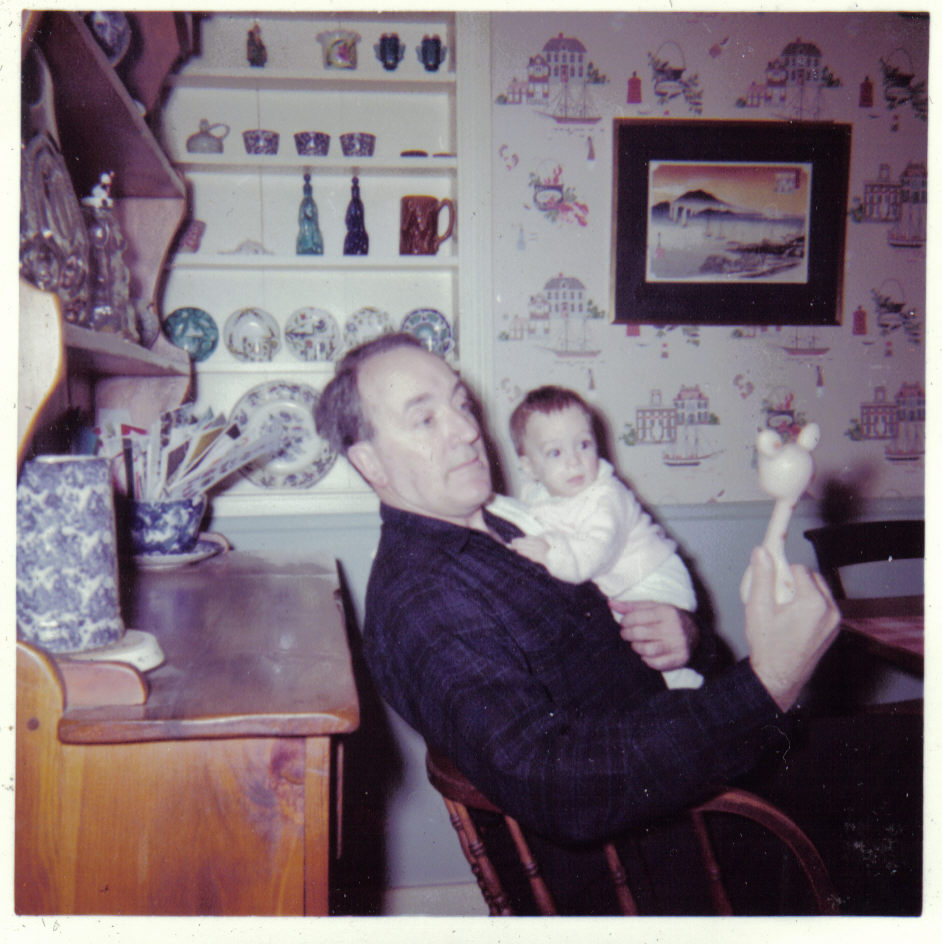
A Writing Family Pt.1 – My Father, Basil Burwell

Basil and Fred Burwell and Friend
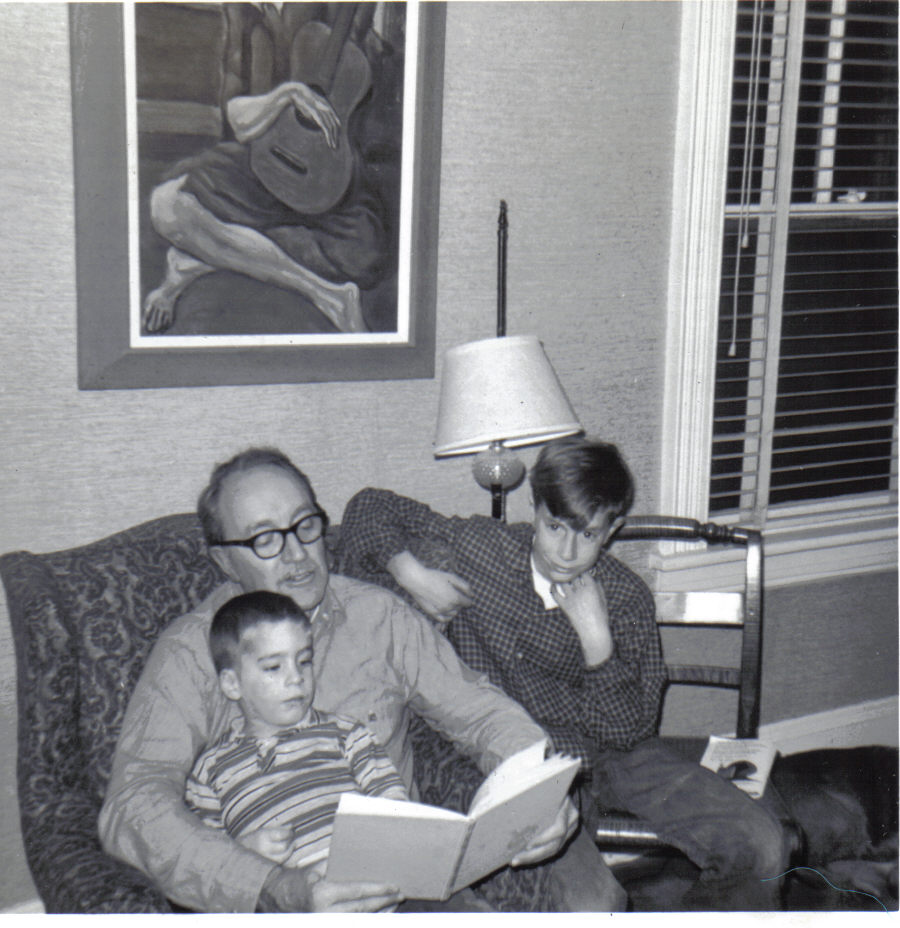
Where did my passion for words come from? I think back to my childhood and find many sources, from the intriguing typeface and old-paper smell of a 1920’s hardback book to a dog-eared copy of the mysterious Dr. Strange Marvel comic left around by my brother Jeremy, to the fresh ink glow of a Dell paperback bought at the local department store. As much as I loved reading words, I also loved the sounds of words and so I became a listener. Every night my father read to me as I slurped up Cheerios and scraped sugar from the bottom of the bowl. When I pull The Phantom Tollbooth off the shelf today, I half hear the echo of my father’s booming voice merging with the bell-like clink of spoon on ceramic bowl.

Basil Burwell reading to Fred and Jeremy

Or we’d be out driving, my father at the wheel, my mother beside him, me in the back, gazing through the window at the passing scenes, then –

“Flug!” my father would say.

My mother would wake out of her reverie. “What?” And then she’d look out the window as we rolled past a busy Gulf station. “Oh, Basil!”

A block later he’d intone, “Deeps Timil,” in his rich actor’s baritone.

My mother would present him with one of her patented scowls. “Oh don’t be ridiculous!”

I’d pinch myself, trying not to burst out laughing when I realized that “Deeps Timil” was “Speed Limit” backwards. My father adored backwards words. A father in one of his novels – probably an alter ego – named his daughter, “Devorppa Klim,” which of course was “Approved Milk.” Magical backward words appeared everywhere, even in our own names. Sometimes, his blue eyes twinkling but with a straight face, he’d introduce himself to strangers as “Lisab Llewrub.” I learned that if I ever felt bored with plain old Fred Burwell, I could always switch it around to Derf Llewrub and pretend I was Welsh.

If you wonder where my Tales from a Misinformed Dictionary comes from, it’s the spirit of Basil Burwell perched on my shoulder, whispering into my ear.

My father once confessed to me that he thought of himself as an unsuccessful man. That surprised me. How many fathers did I know who could say they’d acted professionally for more than a decade and appeared in films with such oddball names as Park Avenue Logger and I Was a Captive of Nazi Germany? But in the 1940’s he left the world of Hollywood and summer stock and became a master teacher, both of the theater and of English literature and creative writing.

He’d always loved to write and he couldn’t resist telling stories. How many times had I bugged him for the further adventures of “Georgie Kleenex?” Especially after the beloved, flimsy character had somehow floated all the way to the moon? He liked to point out that one of his first published stories, “The Flag that Set Us Free, published in the famous Story magazine in 1944, was based on one of his schoolboy stories that had received a C+, possibly due to his incorrigibly bad handwriting. Story editor Whit Burnett urged him to “think long” and in 1954, the historical epic, Our Brother the Sun, became his first published novel.
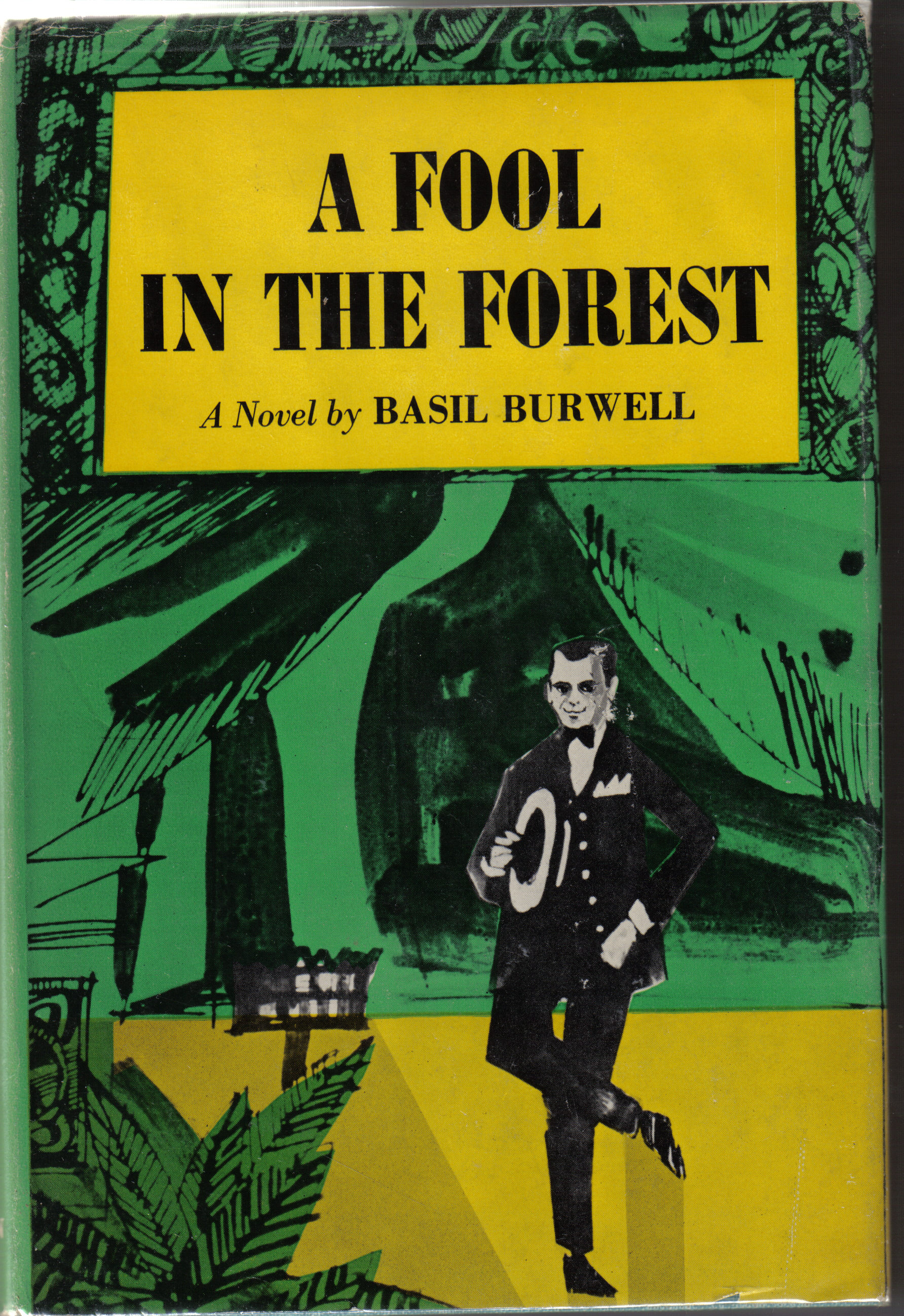
A Fool in the Forest
, which appeared in 1963, was his personal favorite. It was an autobiographical novel about a young man fresh out of high school in 1929, experiencing a wild summer with a troupe of actors at a summer theater set in an old fashioned amusement park.
When I first became interested in writing, Dad would take my penciled rough draft and cover it with red pen corrections, comments, and suggestions. Then we’d sit down and talk about it. I knew I was getting somewhere when less and less red marked up my work.

Perhaps Dad had so many strong passions he couldn’t simply hue to one path. To my mind he was an extremely successful man – a fine actor and director, brilliant teacher, published author, delightful storyteller, and a warm and generous father and mentor.
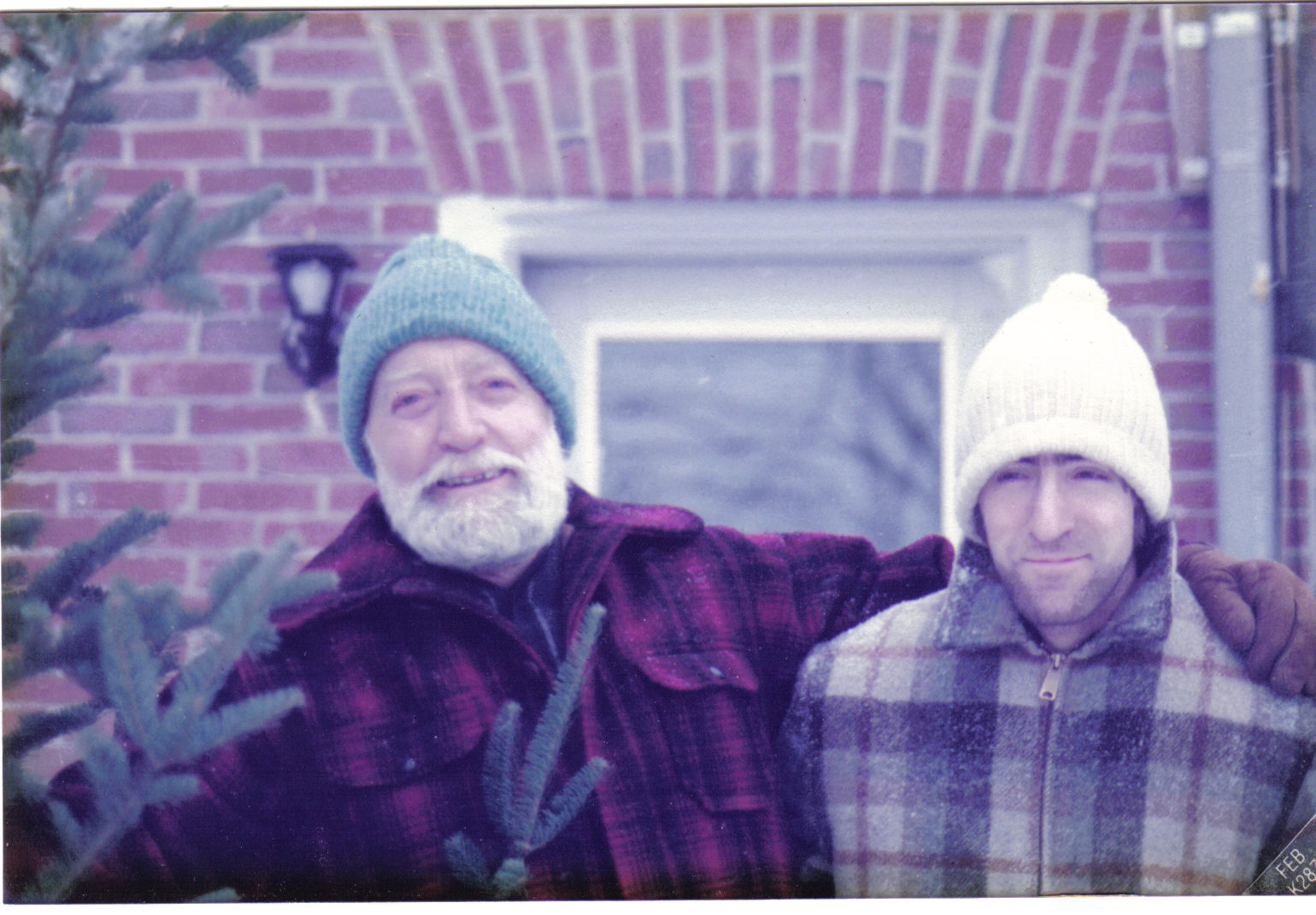
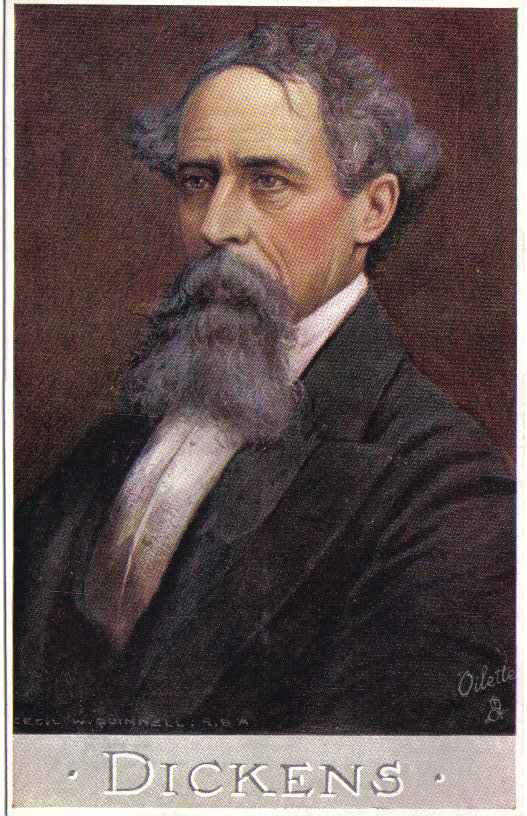
Happy Birthday Charles Dickens! or “Dickens and Me”

When I was eleven or twelve, my mother took me by the arm, marched me over to one of the many crowded family bookcases and pointed to a long row of uniform, green-covered hardbacks. “Give one of these a try,” she said. “They’re absolutely marvelous.” When I hesitated, she huffed impatiently and said, “You’re ready! Try Oliver Twist or Nicholas Nickleby, then move on to one of the best, David Copperfield.”

Charles Dickens was my mother’s favorite author, a longtime companion from childhood on. I pulled Oliver Twist off the shelf, curled up on one of the overstuffed old chairs in our living room, and within a couple of hours Dickens had me enthralled by his characters, hooked by his intricate plotting, so completely immersed in his world that I had trouble extricating myself when I dimly became aware of the dinner bell. As soon as possible I went back to Oliver and the Beadle and the Artful Dodger and a host of other memorable characters.

Over the years, Dickens became many things to me: he helped give me a broader view of the world, he taught me how to observe and reflect on human nature, and he inspired me to write. He also helped keep me close to my mother, even during the most frustrating period of our relationship during my teenage years.

“What are you reading?” Mom would say.

Little Dorrit.”

“Ah! That’s one of my discoveries. People don’t talk about that one so much, but it’s brilliant.”

As a writer of much plainer prose, I find it impossible to emulate Dickens, and yet I continue to learn from him and he continues to influence me through his attention to the tiniest details which add up to razor-sharp observation and above all through his compassion for his characters.

I recently celebrated my nearly lifelong interest in Dickens and his world by compiling a collection of Dickens-related materials for e-publisher, Delphi Classics. Here’s how we advertised Dickensiana Volume One: Dickensiana is a first of its kind e-compilation of period accounts of Dickens’s life and works, rare 19th and early 20th century books and articles about Dickens and Dickensian locales, reminiscences by family, friends and colleagues, tribute poems, parodies, satires and sequels based on his works and much more, spiced with an abundance of vintage images.

The collection is available from Amazon.com and from the Delphi Classics website. I heartily recommend the many fabulous author collections sold by Delphi. Owner Peter Russell loves classic literature, felt determined to create the best public domain collections available, and admirably succeeded. Delphi’s Charles Dickens collection is staggeringly huge, not only chock full of nearly everything Dickens ever wrote, but replete with thousands of images from the books and of Dickens-related locales.

So, happy 200th birthday, Charles, and thank you!

Delphi Classics

Next Newer Entries